
Blog
Laboratory Interior Design Standards Every Facility Must Follow

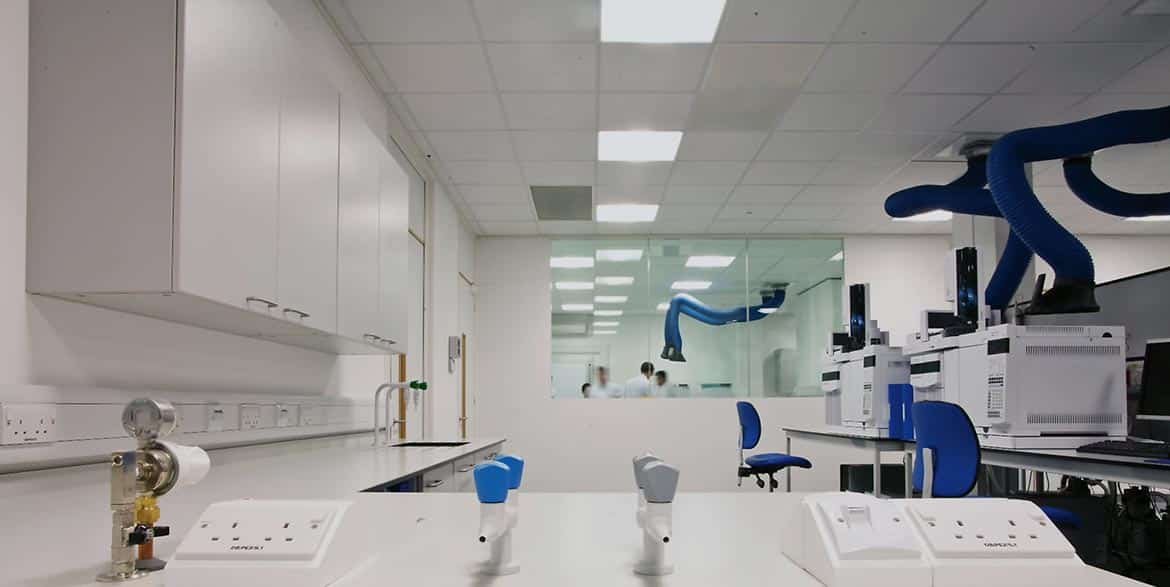
Designing a laboratory is far more complex than designing a regular commercial space. A well-designed lab must ensure safety, compliance, efficiency, and accuracy, while also supporting future scalability. Whether it’s a research lab, diagnostic lab, pharma lab, or testing facility, following standardized interior design guidelines is essential for smooth operations and regulatory approval.
In this blog, we explore the key laboratory interior design standards every facility must follow.
1. Compliance with Regulatory Guidelines
Laboratory interiors must align with national and international standards such as:
- ISO (International Organization for Standardization)
- GLP (Good Laboratory Practices)
- GMP (Good Manufacturing Practices)
- NABL / NABH (India-specific)
- OSHA safety standards
- CDC and WHO guidelines (for biosafety labs)
Compliance ensures safety, credibility, and eligibility for certifications and audits.
2. Proper Space Planning & Workflow Design
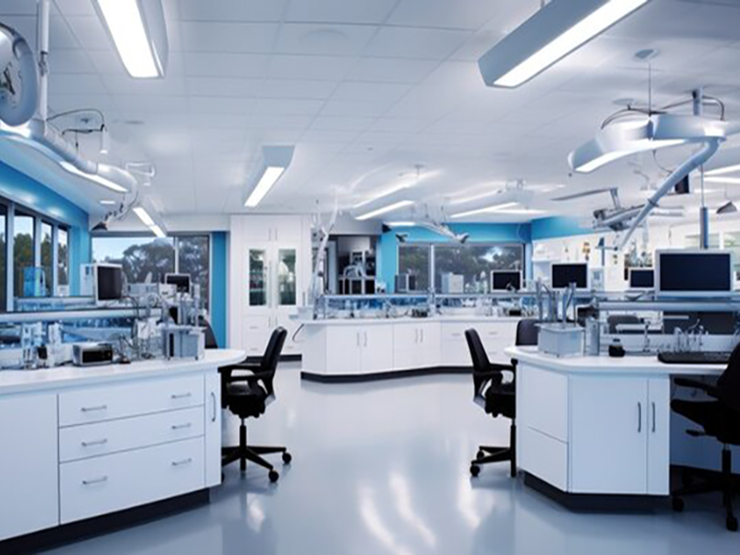
Efficient laboratory design begins with smart space planning. Labs should be designed to support a logical workflow, minimizing cross-contamination and unnecessary movement.
Key considerations:
- Segregation of clean and contaminated zones
- Separate areas for sample receipt, testing, storage, and disposal
- Unidirectional movement of samples and personnel
- Adequate aisle widths for safety and equipment handling
Good workflow design improves productivity and reduces operational risks.
3. Ventilation & Airflow Control
Ventilation is one of the most critical standards in laboratory interior design.
Essential requirements include:
- Proper HVAC systems with air changes per hour (ACH)
- Negative or positive pressure rooms based on lab type
- Fume hoods and biosafety cabinets
- HEPA filtration for sensitive environments
Correct airflow prevents exposure to hazardous fumes, pathogens, and contaminants.
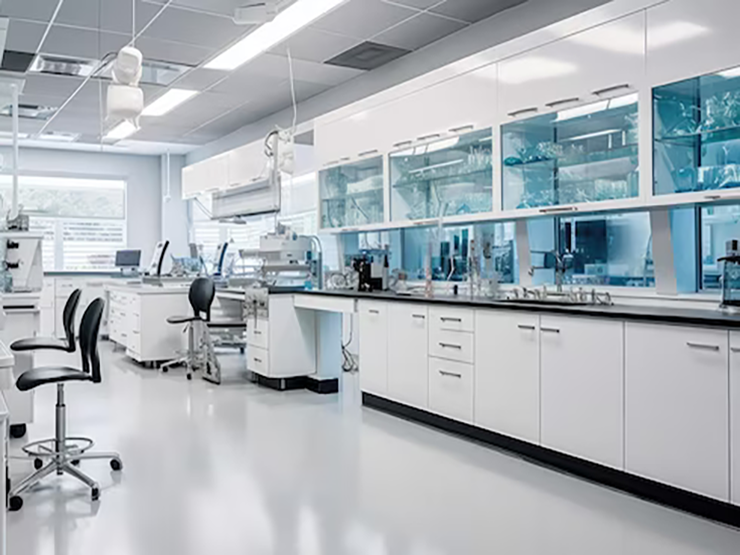
4. Laboratory Furniture & Workstations
Lab furniture must be ergonomic, chemical-resistant, and durable.
Standard features include:
- Epoxy resin, granite, or phenolic worktops
- Modular lab benches for flexibility
- Anti-corrosive cabinets and storage units
- Height-appropriate seating and work surfaces
Well-designed furniture enhances comfort, safety, and long-term usability.
5. Electrical & Data Infrastructure
Laboratories rely heavily on equipment, making electrical planning crucial.
Interior design standards require:
- Sufficient power outlets with proper earthing
- Dedicated circuits for heavy equipment
- Backup power (UPS and generators)
- Structured cabling for data, instruments, and automation systems
Proper planning prevents downtime and equipment damage.
6. Safety Features & Emergency Provisions
Safety is non-negotiable in any laboratory setup.
Mandatory safety elements include:
- Emergency exits and clear signage
- Fire detection and suppression systems
- Eye wash stations and safety showers
- Chemical spill containment solutions
- Non-slip, chemical-resistant flooring
These features protect personnel and ensure compliance during inspections.
7. Lighting Standards
Laboratory lighting should provide uniform illumination without glare.
Best practices include:
- LED lighting with adequate lux levels
- Task lighting for precision work
- Emergency lighting for power failures
Proper lighting reduces errors and eye strain.
8. Material Selection for Interiors
Materials used in labs must withstand chemicals, moisture, and frequent cleaning.
Recommended materials:
- Epoxy or vinyl flooring
- Anti-bacterial wall finishes
- Stainless steel fixtures
- Seamless surfaces to avoid microbial growth
Durable materials ensure hygiene and long-term performance.
9. Storage & Waste Management
Laboratory interiors must include dedicated storage and waste-handling zones.
Standards require:
- Separate storage for chemicals, samples, and consumables
- Proper labeling and safety cabinets
- Designated biohazard and chemical waste disposal areas
This supports safety, organization, and regulatory compliance.
10. Future Expansion & Flexibility
A well-designed lab should accommodate future growth.
Smart interior planning includes:
- Modular furniture systems
- Flexible utility connections
- Provision for additional equipment
This reduces renovation costs and operational disruption later.
Conclusion
Following laboratory interior design standards is essential for creating safe, compliant, and efficient facilities. From ventilation and safety systems to workflow planning and material selection, every detail matters. A professionally designed laboratory not only meets regulatory requirements but also boosts productivity, accuracy, and staff confidence.
If you’re planning a new lab or upgrading an existing one, partnering with experienced laboratory interior design experts ensures your facility meets all mandatory standards while remaining future-ready.