
Blog
Corporate Interiors in Bangalore: Space Planning Strategies for Maximum Efficiency

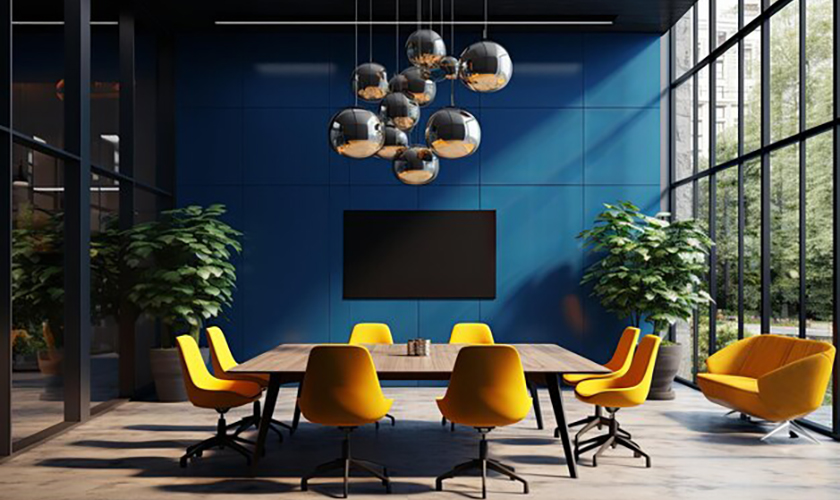
In a fast-growing business hub like Bangalore, office spaces are evolving rapidly. With rising commercial real estate costs and hybrid work culture becoming the norm, companies are focusing on smart corporate interior design that maximizes every square foot.
Efficient space planning is no longer just about fitting desks into a room — it’s about creating a productive, flexible, and inspiring workplace.
In this blog, we explore the best space planning strategies for corporate interiors in Bangalore to achieve maximum efficiency.
1. Understanding Business Needs Before Designing
Every organization operates differently. IT companies, startups, consulting firms, and manufacturing corporates have unique workflow patterns.
Before planning the layout, it’s essential to:
- Analyze team size and growth projections
- Understand departmental interactions
- Identify collaboration frequency
- Evaluate storage and technical requirements
A well-planned corporate interior begins with a deep understanding of business operations.
2. Open Layout with Smart Zoning
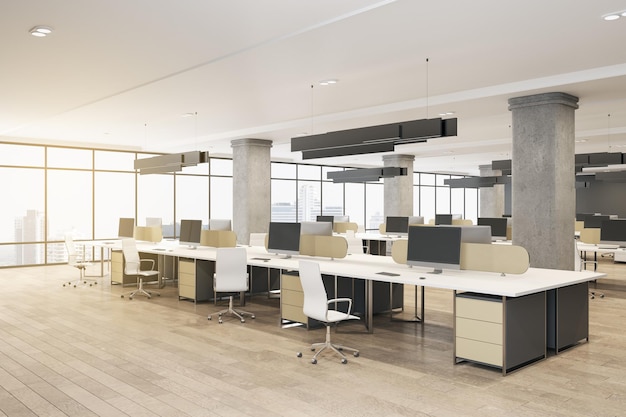
Open-plan offices remain popular, especially among tech companies in Bangalore. However, the key is smart zoning.
Instead of a completely open space:
- Create dedicated collaboration zones
- Include quiet focus areas
- Design semi-private cabins for leadership
- Allocate informal breakout spaces
Zoning ensures privacy without compromising openness, improving both productivity and employee comfort.
3. Flexible & Modular Furniture
Flexibility is crucial in modern corporate interiors. Modular workstations and movable partitions allow companies to reconfigure spaces as teams grow or projects change.
Benefits include:
- Easy expansion or restructuring
- Reduced renovation costs
- Improved adaptability for hybrid work models
Flexible layouts future-proof your office space.
4. Efficient Circulation Planning
Proper circulation ensures smooth movement within the workspace. Poor planning can lead to congestion and wasted space.
Best practices:
- Maintain clear walkways
- Position departments logically
- Avoid dead corners
- Optimize meeting room placement
Efficient circulation directly enhances workflow efficiency.
5. Multi-Functional Spaces
With rising rental costs in Bangalore’s commercial hubs like Whitefield and Electronic City, multi-purpose spaces are a smart solution.
Examples:
- Training rooms that convert into meeting halls
- Cafeterias that double as informal collaboration zones
- Reception areas that include waiting lounges and discussion corners
Multi-functional design maximizes usage without increasing area.
6. Smart Storage Solutions
Clutter reduces efficiency. Integrated storage planning ensures a clean and organized workspace.
Consider:
- Vertical storage units
- Under-desk storage
- Digital documentation to reduce physical files
- Built-in cabinets within partitions
A clutter-free office boosts productivity and maintains a professional appearance.
7. Optimizing Natural Light & Ventilation
Bangalore’s pleasant climate allows offices to benefit from natural light and ventilation.
Space planning should:
- Position workstations near windows
- Use glass partitions to allow light flow
- Reduce heavy opaque dividers
- Incorporate indoor plants
Natural light improves employee well-being and reduces energy costs.
8. Technology-Integrated Workspaces
Modern corporate interiors must integrate technology seamlessly.
Key elements include:
- Smart meeting rooms
- Integrated wiring and cable management
- Acoustic solutions for virtual meetings
- Charging stations at collaborative areas
Tech-enabled spaces enhance productivity and support hybrid teams.
9. Employee-Centric Design Approach
Efficient space planning goes beyond physical layout. It considers employee comfort and engagement.
Include:
- Ergonomic furniture
- Relaxation zones
- Wellness rooms
- Collaborative lounges
Happy employees are more productive, and well-designed interiors play a vital role in employee satisfaction.
10. Planning for Future Scalability
Bangalore’s corporate ecosystem is dynamic. Businesses expand quickly.
An efficient corporate interior should:
- Allow easy addition of workstations
- Support department reshuffling
- Adapt to evolving business models
Scalability ensures long-term value and reduces future redesign costs.
Conclusion
Corporate interiors in Bangalore are transforming with a focus on smart space planning and operational efficiency. By combining flexible layouts, technology integration, employee-centric design, and scalable planning strategies, businesses can create workspaces that are both functional and inspiring.
In today’s competitive corporate environment, efficient space planning is not an expense — it’s a strategic investment that drives productivity, collaboration, and growth.
If you’re planning to design or renovate your corporate office in Bangalore, thoughtful space planning can make all the difference.